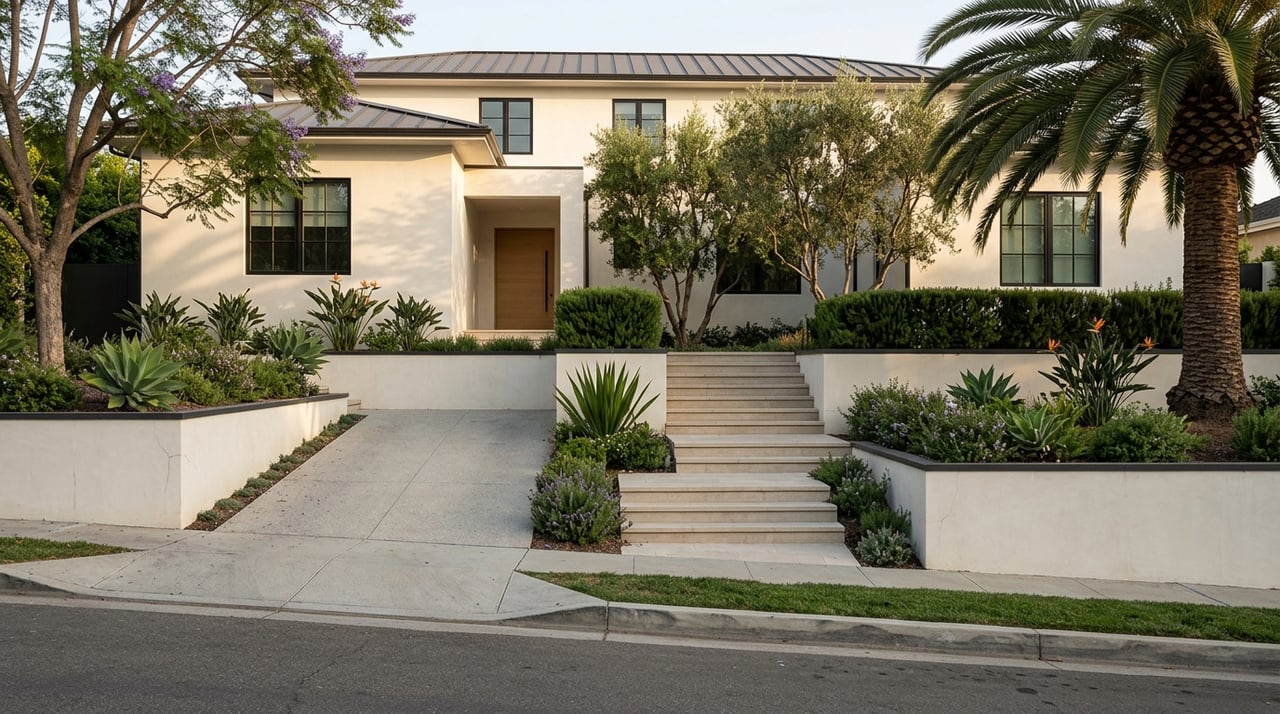
Wondering whether Beverly Hills living is better on a flat, walkable street or up in the hills with more privacy and views? If you are narrowing your search in Beverly Hills, this is one of the most important distinctions to understand because the Flats and the hillside estates can offer very different day-to-day experiences. Below, you’ll get a clear, practical breakdown of how these two areas differ in setting, feel, pricing patterns, and ownership considerations so you can focus on the version of Beverly Hills that fits you best. Let’s dive in.
Beverly Hills Flats vs Hillside Estates
In Beverly Hills, the “Flats” generally line up with the city’s Central Area, roughly between Sunset Boulevard and Santa Monica Boulevard. According to the city’s land-use report, this middle band is primarily medium-density single-family territory with lots of about 13,000 square feet.
By contrast, the area north of Sunset is shaped by hillside topography and lower-density estate-style development. The city describes that area as built around roughly one-acre lots, and it also advises property owners and buyers to confirm whether a parcel is in the Central, Hillside, or Trousdale Estates area rather than relying only on neighborhood labels.
That distinction matters because two homes with the same Beverly Hills address can come with very different lot conditions, privacy levels, and design rules depending on where they sit.
How the Flats Feel Day to Day
If your priority is convenience, the Flats are often the more straightforward fit. The city notes that the Central Area has sidewalks and feels more pedestrian-friendly than the area north of Sunset, which can make daily routines feel simpler and more connected.
In practical terms, flatter streets and more consistent sidewalks often mean easier walks, smoother access in and out, and a more neighborhood-oriented rhythm. Beverly Hills’ Complete Streets planning also reflects a broader goal of making it easier for people to walk to nearby amenities.
For many buyers, that translates into a lifestyle that feels polished but accessible. You may still be in a luxury setting, but the experience tends to feel more grounded in daily movement and classic residential street life.
What buyers often like about the Flats
- Flatter lots
- More pedestrian-friendly streets
- Easier day-to-day access
- A more consistent neighborhood pattern
- Strong appeal for buyers who want convenience without leaving Beverly Hills
How Hillside Estates Feel Day to Day
North of Sunset, the experience shifts. The city describes the hillside area as conforming to topography, and many streets do not have sidewalks, which changes how the neighborhood feels from the moment you arrive.
Homes in the hills are often gated and landscaped for privacy. From the street, you may only see a driveway or gate, which creates a more secluded and estate-oriented impression than what you typically find in the Flats.
This is also where elevation becomes part of the appeal. In Trousdale Estates, the city has a specific view-restoration process for certain private-tree obstructions, which shows just how central views can be to hillside ownership.
What buyers often like about the hills
- More privacy
- Elevated settings
- Larger grounds in many cases
- Stronger estate character
- Greater emphasis on views and seclusion
Why pricing is not a simple comparison
It is tempting to ask which area is more expensive, but Beverly Hills does not break down that neatly. Citywide, the market remains firmly ultra-luxury, with Realtor.com’s March 2026 overview showing a median listing price of $6.275 million, a median list price of about $1,480 per square foot, 61 median days on market, and 393 active listings.
At the same time, those citywide figures blend condos, apartments, and single-family homes, so they are not a clean comparison for the Flats versus the hills. Zillow’s March 31, 2026 home-value index for Beverly Hills overall was $3.66 million, but again, that number reflects a broad mix of property types.
For a more neighborhood-specific snapshot, Zillow’s index places The Flats at $10.03 million, up 9.8% year over year, while Trousdale Estates is at $7.65 million, up 8.1%. That does not mean hillside properties are simply less expensive. Instead, it suggests the hillside market is less uniform and more heavily influenced by individual parcel traits.
In the hills, the site can drive value
In the hillside sections of Beverly Hills, value often depends on factors beyond square footage alone. Privacy, access, view orientation, topography, and future potential can all shape pricing in a major way.
Current public listings support that wider spread. Listings in the Beverly Hills Flats are currently shown from roughly $6 million to $32 million, while the broader north-of-Sunset Beverly Hills listing set spans about $1.42 million to $38.5 million.
That range helps explain the core difference. In the Flats, homes tend to sit in a more consistent context. In the hills, the geography creates a broader mix that can include more modest hillside homes, redevelopment opportunities, and trophy estates within the same general area.
Why these areas developed so differently
The split between the Flats and the hills is not random. Beverly Hills grew with a landscape-first mindset, shaped by Wilbur D. Cook’s 1907 street plan of wide, curving roads that followed the land rather than forcing a rigid grid.
The Beverly Hills Hotel opened in 1912, the city incorporated in 1914, and by the 1950s the city was so built out that developers were literally cropping mountains to create more housing. That history helps explain why the hillside product feels more topographic, private, and estate-like, while the central area developed as a more settled residential band.
When you tour both areas, you can still feel that difference today. The Flats often read as orderly and classically residential, while the hills feel more shaped by the land itself.
Remodeling rules can vary by area
If you plan to renovate, expand, or rebuild, location matters beyond lifestyle. Beverly Hills applies different rules depending on whether a home is in the Central Area, the Hillside Area, or Trousdale Estates.
According to the city, Central Area homes are subject to design review for visible exterior changes. Hillside Area homes follow a separate section of the zoning code that addresses items such as floor area, height, setbacks, accessory structures, landform alteration, and view preservation.
Trousdale Estates has its own article as well. So if you are buying with a future project in mind, it is important to verify the parcel’s designated area before assuming the same approval process applies across Beverly Hills.
Which area fits your lifestyle best?
For many buyers, the decision comes down to how you want Beverly Hills to feel on an ordinary Tuesday, not just how it looks in listing photos. The Flats and the hills can both deliver prestige, beautiful homes, and long-term appeal, but they support different routines.
If you want easier walking, flatter lots, and simpler day-to-day access, the Flats are usually the better fit. If you are drawn to privacy, elevation, larger grounds, and a stronger view-driven estate setting, the hills north of Sunset often make more sense.
Neither choice is universally better. The right move is the one that matches how you live, what you value in a homesite, and whether your priorities lean toward convenience or seclusion.
A quick side-by-side view
| Feature | Beverly Hills Flats | Hillside Estates North of Sunset |
|---|---|---|
| General location | Roughly between Sunset and Santa Monica | North of Sunset |
| Typical setting | Flatter residential area | Topographic hillside terrain |
| Lot pattern | About 13,000-square-foot lots in the Central Area | Roughly one-acre lots in low-density hillside areas |
| Walkability feel | More pedestrian-friendly, with sidewalks | Less pedestrian-oriented, many streets without sidewalks |
| Street presence | More visible homes and traditional streetscapes | More gates, landscaping, and privacy from the street |
| Common buyer draw | Convenience and ease | Privacy, views, and estate feel |
| Rule framework | Central Area design review | Hillside or Trousdale-specific regulations |
If you are comparing homes in both pockets, it helps to evaluate not just the house but also the street, the lot, the approach, and the long-term use potential. In Beverly Hills, those details can shape your ownership experience as much as the home itself.
If you want a more tailored read on Beverly Hills micro-locations, design potential, or off-market opportunities, Morgan Goldberg offers a concierge, design-aware approach to buying and selling across the Westside luxury market.
FAQs
What is the Beverly Hills Flats area?
- In practical real estate terms, the Flats generally align with Beverly Hills’ Central Area, roughly between Sunset Boulevard and Santa Monica Boulevard.
What counts as Beverly Hills hillside estates?
- This usually refers to the areas north of Sunset Boulevard, where the city describes lower-density residential development shaped by hillside topography.
Is Beverly Hills Flats more walkable than the hills?
- Yes. The city says the Central Area has sidewalks and feels more pedestrian-friendly than the area north of Sunset.
Are Beverly Hills hillside homes always more expensive?
- Not necessarily. Neighborhood pricing in the hills is less uniform and can vary widely based on views, privacy, access, lot traits, and redevelopment potential.
Why do Beverly Hills Flats and hillside homes have different rules?
- Beverly Hills applies different zoning and design standards to the Central Area, Hillside Area, and Trousdale Estates, so remodeling and building rules can change by parcel location.
Should buyers verify whether a home is in the Central, Hillside, or Trousdale area?
- Yes. The city specifically advises checking a parcel’s designated area before relying on neighborhood labels, especially if you are planning future exterior changes or redevelopment.