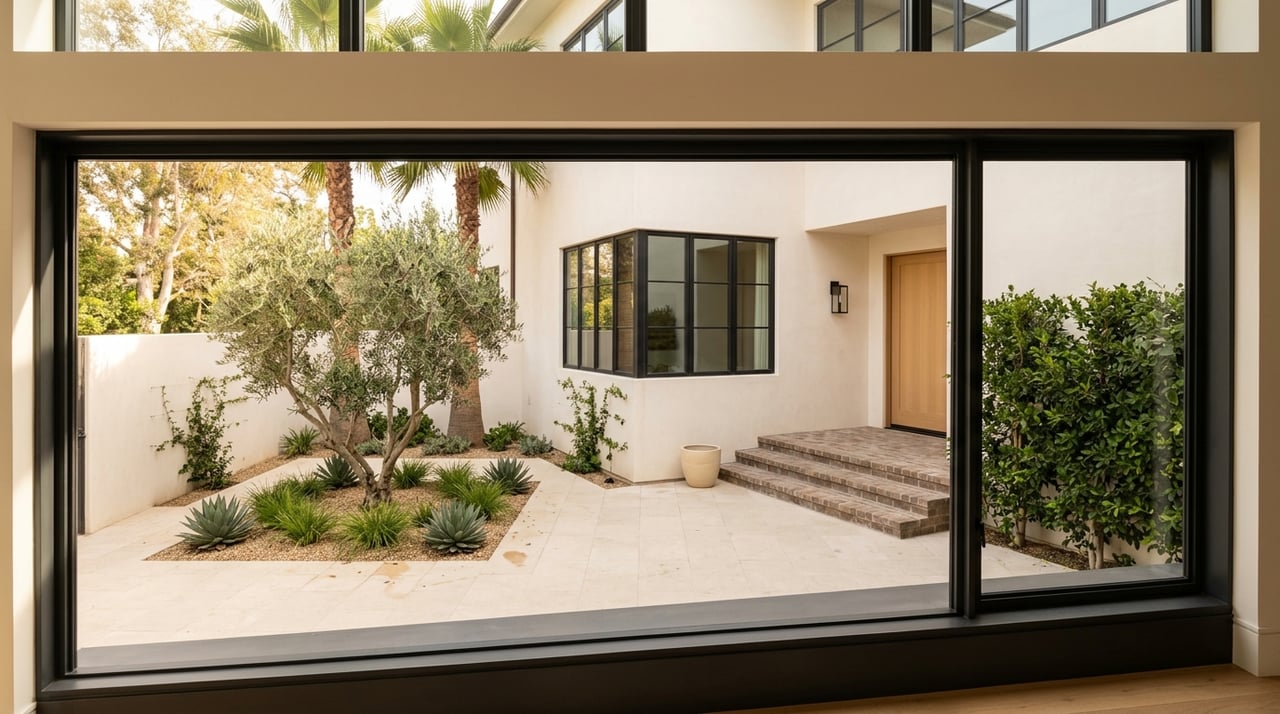
If you picture Bel Air as one fully gated neighborhood, you are not alone. Many buyers come in expecting a single, uniform access model, then quickly realize Bel Air is more layered than that. Understanding those layers can help you focus your search, compare pockets more clearly, and find the version of Bel Air that best fits how you want to live. Let’s dive in.
Bel Air Is Not One Gated Community
Bel Air began in 1922 as a subdivision created by Alphonzo Bell, with improved lots, architectural review, and minimum build requirements shaping its early identity. Today, the broader neighborhood stretches roughly from Mulholland Drive to the north, Sunset Boulevard to the south, Beverly Glen Boulevard to the east, and Sepulveda Boulevard to the west, according to the Bel-Air Association.
What matters for you as a buyer is this: Bel Air is not a single guard-gated community. Instead, it is a mix of historic entrance gates, open estate streets, HOA-based pockets, and a few more clearly controlled-access enclaves. That difference affects privacy, daily access, neighborhood feel, and the kind of home inventory you are likely to see.
Historic Gates Define The Original Core
East Gate And Old Bel Air
The East Gate at Bel Air and Sunset is recorded by the City of Los Angeles as a 1924 entrance-gate resource. Nearby, the old Bel Air Estates area traces back to the original 1922 to 1941 planning district bounded by Nimes Road, Sunset Boulevard, Beverly Glen Boulevard, and Bel Air Road.
For buyers, this part of Bel Air often delivers the strongest sense of legacy. You get the original street pattern, long-established estate blocks, and the visual cues that give Bel Air its classic identity, even though the area is not one neighborhood-wide guard-gated system.
West Gate And The Sunset Entrance
The West Gate at Bellagio and Sunset is also a 1924 historic entrance feature, recorded by the city as Renaissance Revival in style. This gate helps frame another important arrival point into the neighborhood and ties directly to the original story of Bel Air’s development.
That matters because entry experience shapes perception. In Bel Air, those gateway markers, paired with mature landscaping and well-known legacy streets, create a polished and established atmosphere that many buyers are drawn to.
What This Area Feels Like
The Bel-Air Association still points to original street names like St. Pierre, Saint Cloud, Bellagio, Copa de Oro, and Nimes as part of the neighborhood’s historic fabric. The Bel-Air Garden Club continues to decorate the East Gate and West Gate during the holiday season, which reinforces that sense of tradition and care.
If you are drawn to pedigree, formal streetscapes, and the timeless image most people associate with Bel Air, this historic core is often the natural starting point. It offers prestige through setting and continuity, not just through controlled entry.
Architecture Changes As You Move Uphill
Stone Canyon And Historic Character
Stone Canyon stands apart because it is the only historic district identified in the Bel Air–Beverly Crest Community Plan Area. It runs along Stone Canyon Road between Chalon Road and Taranto Way and includes homes dating from 1932 to 1954.
If architectural pedigree matters to you, Stone Canyon is worth a close look. It tends to offer a more cohesive period streetscape and a lower-scale historic character than some of the larger hillside estates found elsewhere in Bel Air.
Beverly Glen And A Mixed Setting
Beverly Glen sits along the eastern edge of Bel Air and has a more mixed housing pattern than the classic lower estate blocks. City planning materials describe it as a canyon area with small commercial pockets at Beverly Glen Circle and in Beverly Glen Canyon.
For you, that can translate into a less uniform and more lived-in atmosphere. It feels more like a canyon neighborhood than a formal estate enclave, which may appeal if you want Bel Air proximity with a different rhythm.
Higher Hillside Bel Air
As you move farther uphill, Bel Air becomes more topographically dramatic. City planning describes more curving roads, hills and canyons, and larger estate-sized properties in the western and northern portions of the area.
The architecture shifts too. Survey work in the community documents notable postwar ranch houses and modernist homes in these higher sections, including work associated with architects such as Frank Lloyd Wright Jr., John Lautner, Craig Ellwood, and Richard Dorman. For buyers, that often means trading flatter parcels for stronger elevation, more dramatic siting, and a broader architectural mix.
Where Controlled Access Becomes Clearer
Bel Air Crest
Among the sources reviewed, Bel Air Crest is the clearest example of a staffed-gate enclave within the broader Bel Air area. Local council meeting materials place the clubhouse and gatehouse on Bel Air Crest Road off Sepulveda Boulevard, with a guard providing directions into the community.
That daily access pattern is meaningfully different from the historic gate areas near Sunset. If your priority is a more defined controlled-entry experience built into the neighborhood itself, Bel Air Crest stands out.
Bel Air Glen And Bel Air Ridge
Bel Air Glen and Bel Air Ridge show a different version of privacy-minded living. Local documents reflect active discussions around gating, guard gates, RFID access, and emergency override systems, which suggests these pockets are highly access-conscious even if they do not read exactly like a single classic guard-gated subdivision.
This distinction is useful when comparing options. Some buyers want the symbolism of a historic entrance, while others want more explicit access control in daily life. Bel Air includes both, but not always in the same place.
Bel Air Ridge Amenities
Bel Air Ridge also stands out for amenities. According to the HOA, the community includes 377 residences across about 100 acres near Mulholland Drive, with 205 attached townhomes and 172 detached single-family homes.
Amenities include six tennis courts, two pools, a spa, a clubhouse, a fitness center, and a private park overlooking Benedict Canyon. If you want organized amenities and an HOA-supported lifestyle in Bel Air, this pocket may offer a different kind of value than the estate streets in the historic core.
What Buyers Should Compare First
Bel Air works best when you compare pockets by lifestyle priorities instead of assuming one neighborhood-wide formula. A home near a historic gate can offer a very different daily experience from a home in an amenity-rich HOA enclave or a higher hillside section.
Here is a simple way to frame your search:
- If you want legacy and classic Bel Air identity, focus on East Gate, West Gate, and the old Bel Air core.
- If you want a recognized historic streetscape, Stone Canyon is the clearest fit.
- If you want more defined controlled access, Bel Air Crest is the strongest match in the sources reviewed.
- If you want a more mixed canyon setting, Beverly Glen may feel more natural.
- If you want amenities with HOA structure, Bel Air Ridge deserves attention.
- If you want elevation and wider architectural variety, explore the higher hillside sections.
The Real Takeaway For Bel Air Buyers
The phrase “gated enclaves” can be helpful, but only if you treat it as a spectrum. In Bel Air, that spectrum runs from historic gateway features at Sunset to legacy estate streets, HOA-managed pockets, and smaller areas where controlled access plays a more visible role in everyday life.
That is exactly why local guidance matters here. Bel Air is nuanced, and the best fit often comes down to subtle differences in access, terrain, architecture, and neighborhood structure that are not obvious at first glance.
If you are weighing Bel Air against other Westside luxury neighborhoods, or narrowing in on a specific pocket, working with a broker who understands how these micro-markets feel on the ground can save you time and sharpen your search. For a more tailored look at Bel Air’s distinct enclaves and available opportunities, connect with Morgan Goldberg.
FAQs
What does “gated enclave” mean in Bel Air?
- In Bel Air, it can mean different things, including historic entrance gates, HOA-managed pockets, or communities with more clearly controlled access such as Bel Air Crest.
Is all of Bel Air guard gated?
- No. Bel Air is not one uniform guard-gated neighborhood. It includes open estate streets, historic gate features, HOA areas, and a smaller number of more controlled-access communities.
Which part of Bel Air feels most historic?
- The East Gate, West Gate, and old Bel Air core typically offer the strongest sense of legacy because they connect most directly to the original subdivision story and long-established streets.
Which Bel Air area has the clearest controlled entry?
- Based on the reviewed sources, Bel Air Crest is the clearest example of a staffed-gate enclave with a gatehouse and guarded access pattern.
What makes Stone Canyon different from other Bel Air pockets?
- Stone Canyon is the only historic district identified in the Bel Air–Beverly Crest Community Plan Area, which gives it a more cohesive historic streetscape and architectural identity.
What does Bel Air Ridge offer buyers?
- Bel Air Ridge offers an HOA-supported setting with substantial amenities, including tennis courts, pools, a spa, a clubhouse, a fitness center, and a private park.