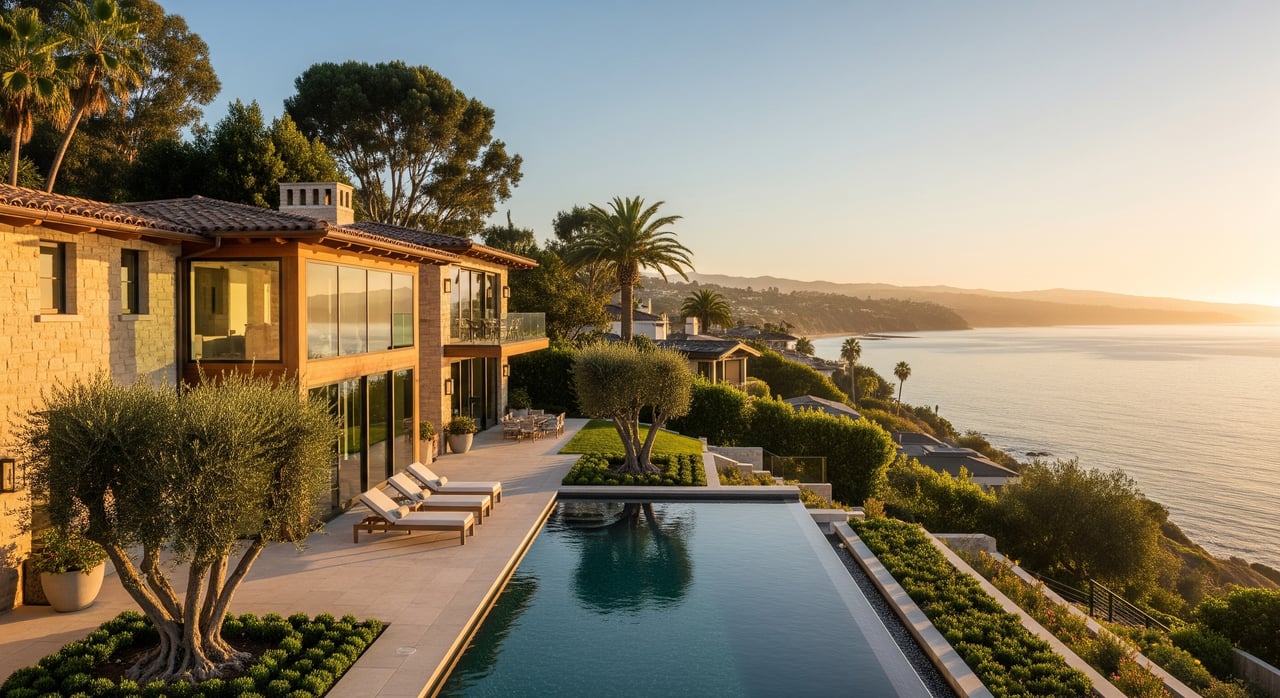
What makes one Los Angeles neighborhood stand out in a city full of options? If you’ve looked at Pacific Palisades, you’ve probably noticed prices that sit a tier above many parts of the Westside. You’re not imagining it. The Palisades combines ocean living, village convenience, privacy, and limited supply in a way few places can. In this guide, you’ll learn the core drivers behind the premium, how to read comps here, and what to watch for if you’re buying or selling. Let’s dive in.
What sets Pacific Palisades apart
Pacific Palisades is a coastal-inland pocket on LA’s Westside bordered by the Santa Monica Mountains and the Pacific. The setting shapes everything. You get cooler breezes, dramatic views, and a laid-back village center wrapped into a primarily single-family neighborhood. Inventory tends to run lean relative to demand, which helps steady prices even when other areas fluctuate.
Buyers often include local families trading up or down, out-of-area second-home owners seeking coastal lifestyle, and design-forward buyers who value distinctive homes. The mix of larger lots, a walkable village core, and a strong privacy profile creates a consistent pull that supports higher pricing.
Ocean proximity and beach access
You feel the Palisades premium most near the water. Being within a short walk or easy drive to the beach adds daily lifestyle value and a sense of prestige. There are only so many coastal parcels, and that scarcity matters.
Market-wise, homes closer to the shoreline or with convenient access often sell in a higher price tier than inland comparables with similar size and condition. When you read comps, isolate recent sales by distance to the beach and compare price per square foot within those bands. Keep sample size in mind because small numbers can skew averages.
Bluff and canyon views
Views are a non-repeatable amenity. A sweeping ocean or coastline panorama, or an expansive canyon scene, can change how a home feels the moment you step inside. That emotional lift shows up in resale.
Local pricing often reflects clear view tiers: no view, partial view, and true ocean panorama. Higher tiers generally command noticeable premiums and may sell faster. If you are pricing a listing or evaluating an offer, group comps by view quality and validate any adjustment with the most recent closed sales rather than relying on generic percentages.
Village walkability and character
The Palisades “Village” offers restaurants, cafes, retail, and daily services in a tight, walkable hub. That small-town feel inside a big city is a major draw.
Homes within an easy walk to the Village typically see stronger showing activity and can attract multiple offers more readily than similar homes farther out. To quantify the effect, look at walk-time or drive-time to the Village rather than straight-line distance, and compare sales within the same sub-area.
Lot size and outdoor living
Many Palisades parcels are larger than you’ll find in denser LA neighborhoods. Usable outdoor space for a pool, lawn, or terraces is a real advantage for everyday living and entertaining.
Flat, buildable lots can trade at a meaningful premium over steep parcels, even when interior square footage is similar. When reading comps, adjust for lot size and, more importantly, for usable yard. Established landscaping, privacy hedges, and outdoor living features can significantly shift buyer perceptions and final price.
Architecture and craftsmanship
Architect-designed homes and high-quality custom construction attract a specific buyer who values design and long-term integrity. In many cases, these properties hold value more resiliently and sell on shorter timelines than standard builds.
If you’re evaluating value, separate comps into standard/spec homes versus custom or architect-attributed homes. Within each set, compare days on market and sale-to-list ratios to see how buyers are responding to design quality right now.
Schools and community institutions
Access to well-regarded public and private school options is a major factor for family buyers. Proximity to schools, parks, and community programs increases day-to-day convenience and often supports stronger demand.
If schools are a priority, confirm current boundaries and assignment rules directly with official sources. When you build a comp set, keep school boundaries consistent so you’re comparing like with like.
Limited new supply
Geography and permitting constraints limit large-scale new development across much of the Palisades. Rebuilds and major additions can require longer timelines and careful planning, especially in coastal-adjacent areas.
Low listing counts, combined with friction around new supply, tend to lift the value of move-in-ready homes. Track months of inventory and the number of active listings in your property’s tier to understand how scarcity may affect pricing.
How to read comps in Pacific Palisades
Getting comps right here means focusing on the details that move price the most.
Define apples-to-apples
- Use a 6 to 12 month window for recent sales.
- Stay within the same sub-neighborhood or clear distance bands to the Village and beach.
- Match on lot size, living square footage, bed/bath count, view tier, condition, and school boundaries.
Adjust for view and proximity
- Classify views as none, partial, or ocean/city panorama. Build separate comp sets for each.
- Create proximity tiers to the beach and Village using realistic travel times.
- Compare price per square foot within each tier to see consistent patterns.
Distinguish condition and project type
- Separate turnkey remodeled homes from original-condition properties and from tear-downs.
- Account for upgrades, functional layout, and potential deferred maintenance in older homes.
- Expect different per-square-foot pricing across these categories.
Weigh lot usability and privacy
- Adjust for flat, usable yard, pool, terraces, guest house or ADU potential.
- Note mature landscaping and privacy features that change livability.
Flag architectural and historic value
- Identify architect-designed or historically significant homes.
- Compare against similar design-caliber comps, not standard inventory, for accurate pricing.
Run practical checks
- Use price per square foot as a starting filter, not the final word.
- Review days on market, sale-to-list ratio, and nearby competing listings in the same tier.
- Exclude celebrity or ultra-custom outliers unless your subject property is truly comparable.
Risks and cost considerations to budget
Premium coastal living comes with a few added checks that are worth doing early.
Coastal and bluff factors
- Bluff-edge parcels may face erosion concerns and coastal permitting constraints.
- Confirm coastal-related requirements and consult specialists before committing to a bluff property.
Seismic readiness
- All LA homes face seismic risk. Older foundations or soft-story elements may need retrofits.
- Earthquake readiness can affect lending, insurance, and renovation budgets.
Insurance budgeting
- Coastal properties can face higher homeowners, wind, or flood insurance costs.
- Verify insurability and premiums early in the process to avoid surprises.
Zoning and approvals
- Significant additions or rebuilds may require lengthy approvals, especially in coastal-influenced areas.
- Build timelines should be part of your pricing strategy and carry-cost plan.
Ongoing maintenance
- Larger lots and custom finishes come with higher maintenance and property tax bases.
- Budget for specialized upkeep and longer lead times on bespoke materials.
What it means for sellers
If you’re selling, lean into what is scarce about your property. Ocean access, true views, a flat usable yard, thoughtful architecture, or proximity to the Village can set your listing apart. Pricing should reflect the right comp set for your tier, not a broad neighborhood average.
Presentation matters. Polished storytelling and design-forward marketing help buyers feel the lifestyle your home offers. In a market where top properties can trigger multiple offers, the right positioning can make a real difference.
What it means for buyers
If you’re buying, define your non-negotiables early. Decide how you value view quality, lot usability, proximity to the Village and beach, and remodeling appetite. Narrowing to sub-neighborhoods and tiers that match your lifestyle helps you move decisively when the right home appears.
Request tailored comp sets that match your specific view tier, lot characteristics, and condition preferences. Generic averages can mislead you in a market with so much variation by block and orientation.
Next steps
- Ask for a tailored comp review that matches view, lot, and condition to your exact address or search area.
- If you are eyeing coastal or bluff-adjacent properties, request geotechnical and permitting histories before you write an offer.
- Set up property alerts for your preferred sub-areas so you see opportunities early.
Ready to talk strategy for your block or your wish list? Connect with Unknown Company for a tailored market read, discreet alerts, and design-forward listing preparation.
FAQs
How do ocean views affect Pacific Palisades pricing?
- View premiums are real, but the size depends on view quality and recent local comps. Dramatic, unobstructed panoramas can command larger uplifts than partial views.
Why do homes near the Palisades Village sell faster?
- Easy access to dining, services, and schools boosts day-to-day convenience. Village-adjacent homes often see stronger showings and can attract multiple offers compared with similar homes farther out.
How should I compare price per square foot in the Palisades?
- Use it as a filter, not a final answer. Always adjust for view tier, lot size and usability, condition, and school boundaries to avoid misleading comparisons.
Are coastal bluff properties a higher risk?
- Bluff-edge homes offer standout views and scarcity, but you should evaluate erosion, permitting constraints, and insurance early with specialized guidance.
Do architect-designed homes really hold value better?
- Often, yes. Recognized architects and high-quality custom construction attract buyers who prioritize design, which can support stronger resale and shorter market times, depending on current comps.